
Build Your Future Workforce While Strengthening Our Region
Work-based learning (WBL) is one of the most practical and effective ways to address workforce needs today while preparing talent for tomorrow. By connecting students to real-world experiences, employers gain earlier access to emerging talent, help shape future skills and strengthen their industry’s long-term talent base.
Powered by
What is work-based learning?
Work-based learning (WBL) connects school learning with real workplace experiences, allowing students to explore careers, build skills and contribute meaningfully to the workforce before and after graduation.
It is an all-encompassing approach that includes:
- Career awareness
- Career exploration
- Career preparation
WBL can happen within schools, in other educational or community settings, or directly in the workplace.
Why is work-based learning important?
Work-based learning is a workforce strategy.
Employers that engage in work-based learning can:
- Build early connections with future talent
- Increase awareness of careers within their organization and industry
- Support career exploration and workforce readiness
- Help shape the skills students bring into the workforce
- Strengthen recruitment, retention and long-term talent development
Whether you are ready to host a job shadow, offer an internship or simply start by sharing career insight, there is a way to engage that aligns with your workforce needs and capacity.
Work-based learning in the region
The Fargo-Moorhead-West Fargo region has established shared goals to expand and strengthen work-based learning across employers and schools.
Regional Work-Based Learning Goals
- 25% of high school seniors engaged annually in work-based learning
Approximately 600 students per year - 650 regional businesses actively engaged in work-based learning by July 1, 2027
- 100% of students engaged in intentional career exploration experiences by graduation
These goals represent a coordinated regional effort and shared commitment to preparing students, supporting employers and strengthening workforce readiness. This work is led in partnership with Fargo Public Schools, West Fargo Public Schools and Moorhead Area Public Schools.
Work-Based Learning Continuum
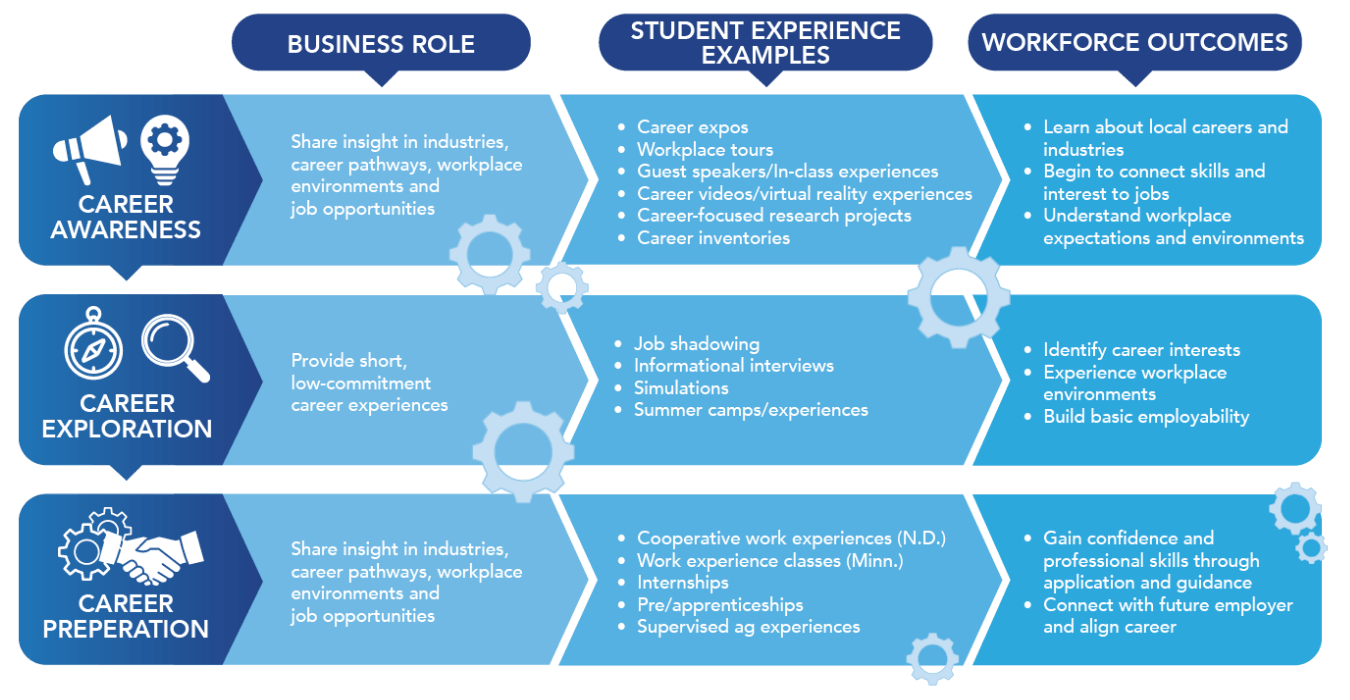
Work-based learning is a continuum of opportunities that allows employers to start where they are and grow over time.
This continuum makes it possible for businesses to choose an entry point that fits their capacity while still making a meaningful impact.
Career Awareness
Low-commitment opportunities that help students learn about industries, career pathways and workplace environments.
Examples may include:
- Career expos
- Workplace tours
- Guest speakers or in-class experiences
- Career videos or virtual reality experiences
- Career-focused research projects
- Career inventories
Career Exploration
Interactive experiences that help students connect interests and skills to real careers.
Examples may include:
- Job shadowing
- Informational interviews
- Simulations
- Summer camps or career-related experiences
Career Preparation
Hands-on experiences that help students build skills, gain confidence and prepare for employment.
Examples may include:
- Cooperative work experiences
- Work experience classes
- Internships
- Pre-apprenticeships
- Supervised agricultural experiences
Frequently asked questions
Ready to explore work-based learning?
There is a place to start, no matter your organization’s size, industry or current capacity.
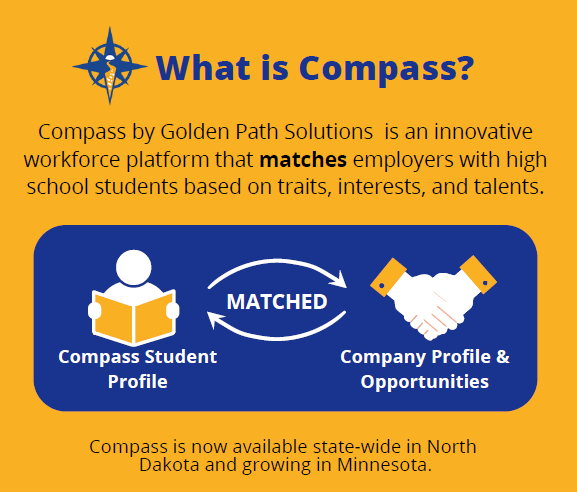
Connect with The Chamber’s Workforce Team to learn more, or get connected with Compass and create your profile today.
RESOURCES
Work-based learning webinar series
Short, action-oriented sessions designed to help employers better understand work-based learning and take the next step.
Session 1: What is work-based learning (WBL)?
- High-level overview of WBL
- How WBL functions
- Different types of WBL
- Range of opportunities
Session 2: Work-based learning as a talent development strategy
- How WBL can lead into your broader workforce development efforts
- How WBL connects students with career opportunities at your company
- Direct employment
- Tuition reimbursement
- Sponsorship programs
- Apprenticeships
- Other structured employment pathways
Session 3: Work-based learning for construction and ag industries
- WBL in construction and agriculture
- Do's and Don'ts for students
- OSHA regulations, insurance requirements and safety considerations
- Best practices for developing and managing successful WBL experiences
Workforce news and stories
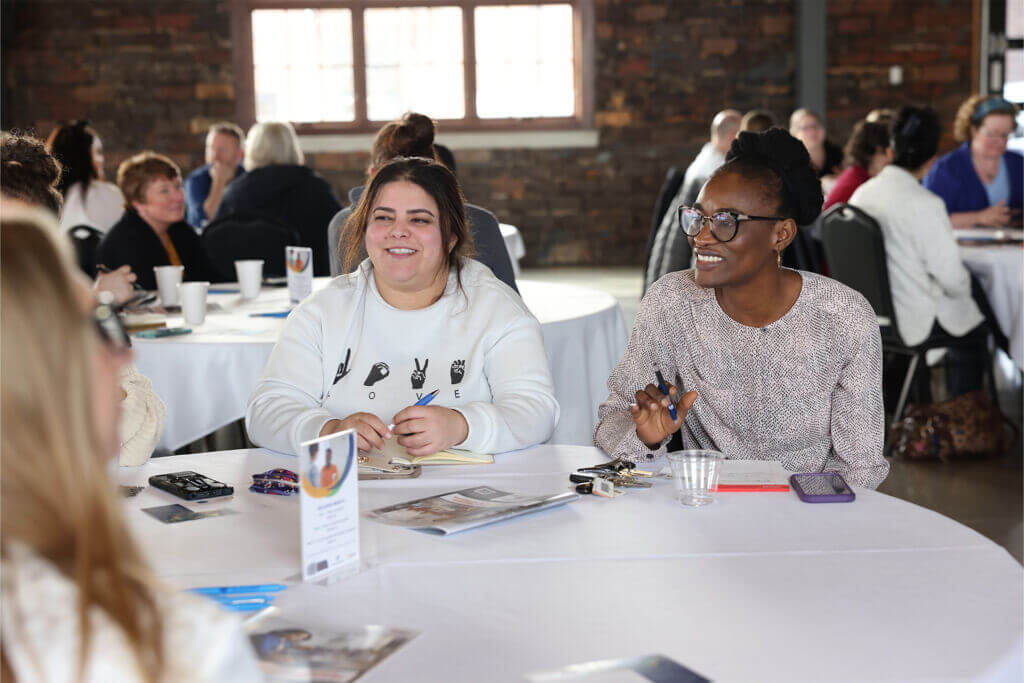
Recruit and Retain a Diverse Workforce: Breaking Barriers for Long-Term Success
Learn how to recruit and retain a diverse workforce while building stronger teams and driving long-term success through equity and belonging.
Read More
How to Support Veterans in the Workplace: Discuss, Connect, Reflect Series Launch
Learn how to support veterans in the workplace with practical tools, expert insights and inclusive strategies in this free virtual session.
Read More
Exploring Workforce Solutions Across North Dakota and Minnesota
Start reading to discover innovative strategies that can help your business shape sustainable workforce solutions.
Read More
Five reasons to attend the Workforce Forum
The Workforce Forum will teach essential strategies, provide data and share resources to help organizations navigate the workforce landscape. Here are five compelling reasons why you should attend:
Read More- « Previous
- 1
- 2