
03.03.26
Setting Unbreakable Boundaries Starts With Your Best Yes
By Setareh Campion, Director of Programs, FMWF Chamber
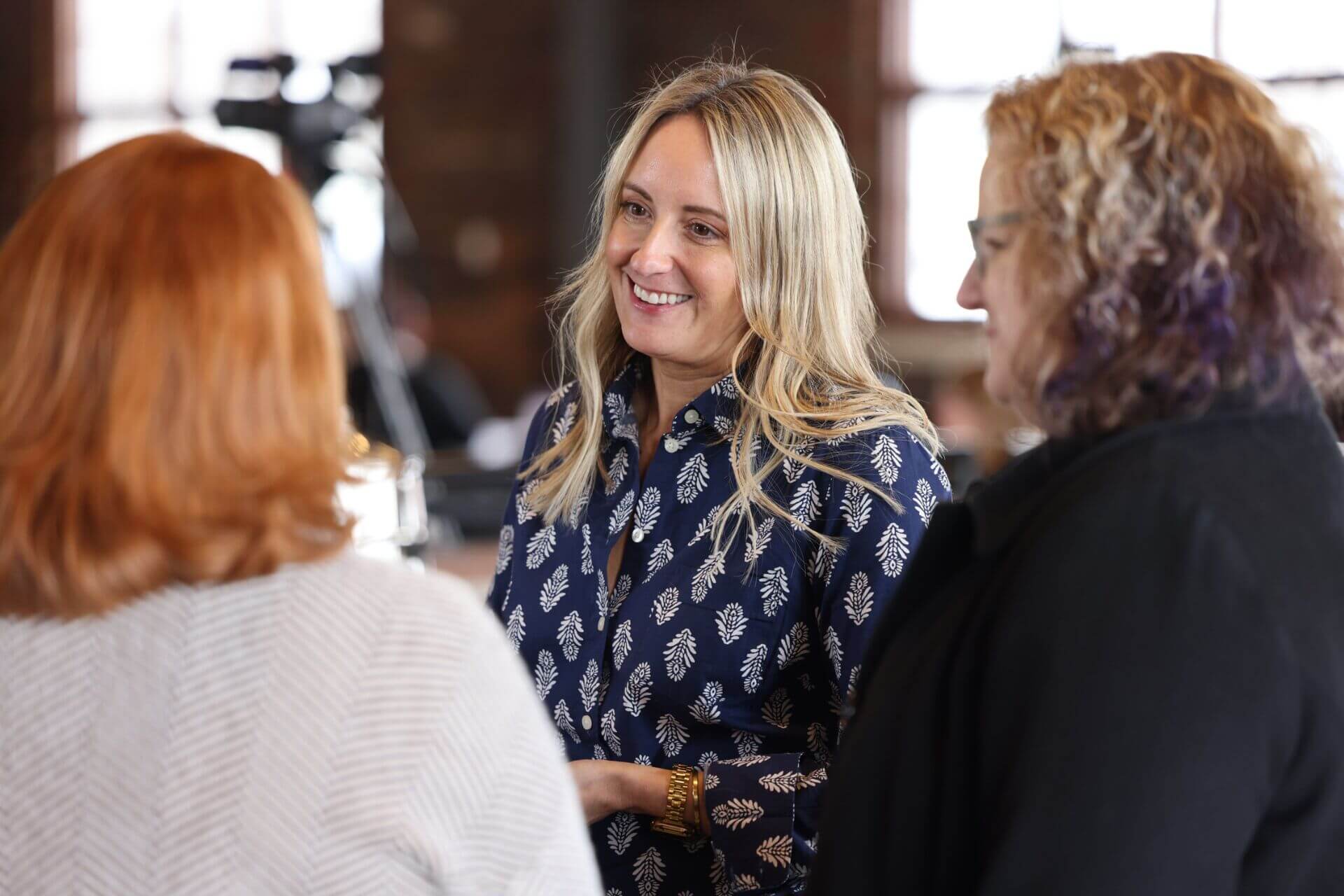
Attendees participate in meaningful conversation at Women Connect: Setting Unbreakable Boundaries on Feb. 24 at the Armory Event Center.
Learn how to set unbreakable boundaries, protect your time and align your commitments with your values so you can confidently say your best yes.
Your calendar is full. Your inbox is active. Your days move quickly from one commitment to the next. From the outside, it looks productive. But when your time isn’t aligned with your values, even good opportunities can leave you feeling stretched thin.
At a recent Women Connect: Setting Unbreakable Boundaries session, professional women from across the region explored what it truly means to set unbreakable boundaries and identify your “best yes.” The content, framework and tools shared during the session were created and led by Kelsey Buell, Founder of You Flourish Company, the message was clear: growth doesn’t come from doing more. It comes from being intentional about what you agree to in the first place.
When you protect your time and energy with clarity and confidence, you create space to show up fully in your career, your relationships and your leadership. During the session, Kelsey shared practical tools and frameworks to help you do exactly that. Here are five key strategies she introduced for living from your best yes.
1. Treat Boundaries Like Protection
A boundary isn’t a wall you build to keep people out. It’s a way of protecting your priorities, your mental space and the commitments you’ve already made. Think of it like locking your door at night. You’re not doing it because you’re afraid of the world. You’re doing it because what’s inside matters. And just like you can unlock the door for the right people at the right time, boundaries can be flexible without being fragile.
Your goal isn’t to say no to everything. Your goal is to stop saying yes by default.
2. Start With Values, Not Availability
If the only question you ask is “Am I free?” then you’ll keep filling your calendar with things that don’t reflect what you value. Instead, identify your top values and define what they look like in action.
For example:
- If you value family, what time do you protect for presence and connection?
- If you value health, what habits are non-negotiable for you?
- If you value faith, learning, community, or growth, where do those show up in the way you spend your time?
Boundaries get easier when you’re clear on what you’re protecting.
3. Build a Pause Into Every “Yes”
Most boundary problems start with speed. You respond quickly. You commit fast. You answer before you reflect. One of the most powerful boundary skills Kelsey emphasized is simple: pause.
Before you say yes, ask a few questions that filter your decision through what matters:
- Does this align with my values?
- Does this support my short-term or long-term goals?
- Will this give me energy or drain me?
- Can I show up well or am I already at capacity?
- Is this urgent or can it wait?
One sentence can change everything: “Can I get back to you on that?” When you slow down your yes, you stop building a life that’s shaped by urgency and other people’s expectations.
4. Use Simple Scripts to Say No Without Overexplaining
Most people don’t struggle with boundaries because they don’t know what they want. They struggle because they don’t know how to say it. Kelsey encouraged using a simple script that’s clear, respectful and firm:
Gratitude + No + Honesty
- “Thank you for thinking of me. I can’t commit right now.”
- “I appreciate the invitation, but I’m at capacity.”
- “That doesn’t work for my schedule, but I’m grateful you asked.”
- “I can’t take that on, but here’s someone who might be a great fit.”
Notice what’s missing: a long justification. You don’t have to earn your boundary by explaining it perfectly. If you tend to apologize automatically, consider replacing “sorry” with “thank you.” It keeps you kind without shrinking your needs.
5. Let Go of Guilt by Reframing What No Means
Guilt often shows up after you do the right thing. You say no… and then you replay it. You wonder if you disappointed someone. You question your decision. Guilt doesn’t always mean you made the wrong choice. Sometimes it just means you’re building a new skill.
Try these reframes:
- Your no creates space for something better aligned.
- Your no gives someone else an opportunity to step in and grow.
- Your no protects your ability to show up fully for the commitments you’ve already made.
Keep Growing With Women Connect
Women Connect creates space for real conversations and practical tools that help you apply what you’re learning long after the session ends. It’s a monthly program designed to support the growth and development of professional women in the Fargo-Moorhead-West Fargo region through inspiring speakers, peer connection and meaningful skill-building.
Join us next on March 31 for Intentional Collisions, a signature Women Connect experience that connects you with women leaders across the region through structured, high-impact conversations designed to provide insight, perspective and inspiration.
SHARE
More Stories
Upcoming Events
Subscribe to email newsletters