
02.24.26
Leadership Beyond the Title: Strategy, Community and Culture
By Roxanne Mullenberg, Leadership FMWF Vice Chair, FMWF Chamber
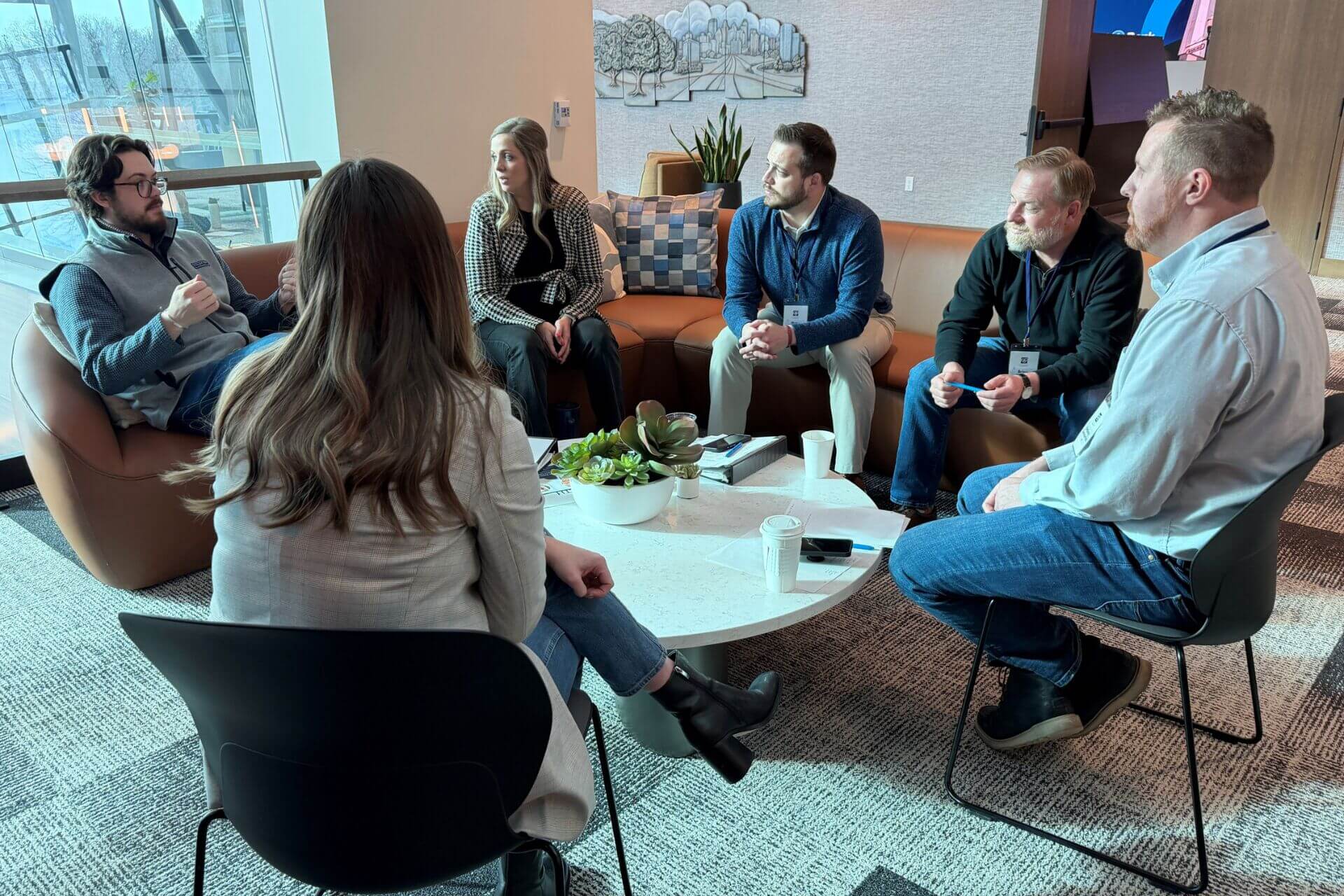
Leadership FMWF participants discuss strategy, community and culture during the February Leadership FMWF session.
Leadership goes beyond titles. Learn how strategy, community engagement and culture intersect through the Leadership FMWF experience.
Leadership today isn’t defined by a job title, a corner office or the number of people who report to you. You can lead from any seat. The most effective leaders are those who think strategically, engage meaningfully with their communities and intentionally build cultures where people can do their best work. These elements are deeply interconnected, and when aligned, they create organizations that are not only successful but sustainable.
This idea is explored as part of the Leadership FMWF program, and this month the cohort examined how strategic thinking, community engagement and workplace culture intersect, and why alignment across all three is essential for long-term organizational success.
Keep reading to explore how these elements work together to strengthen leadership, organizations and the broader community.
Leadership as Strategic Stewardship
At its core, leadership is about direction. Strategic thinking allows leaders to move beyond reacting to daily challenges and instead focus on long-term impact. This doesn’t mean having all the answers; it means asking the right questions. Where are we going? Why does it matter? What trade-offs are we willing to make?
Lauren Young of Velli Consulting challenged the cohort to view strategy as “connecting today’s actions to tomorrow’s goals,” reinforcing that strategic leadership is as much about clarity as it is about vision.
Strategic leaders balance vision with execution. They connect high-level goals to everyday decisions, ensuring that strategy isn’t just discussed in meetings but lived out in action. This clarity gives teams confidence. When people understand the “why” behind their work, they are more engaged, creative and resilient during times of change.
The Power of Community Involvement
Strong leadership extends beyond the walls of the workplace. Organizations do not operate in isolation; they are part of broader communities that include customers, partners and neighbors. Leaders who understand this recognize community involvement is not a distraction from business goals but an investment in long-term trust and relevance.
Erin Bonn (The Village Family Service Center), Heather McDougall (Concordia College), Vikki Nielsen (Bell Bank) and Simone Wai (Folkways) shared how their organizations intentionally embed community engagement into their operations, not as an add-on but as a core leadership responsibility.
Being involved in the community builds credibility and connection. Whether through volunteering, local partnerships, mentorship or advocacy, leaders who show up demonstrate values in action. This visibility fosters pride among employees, strengthens relationships and reinforces the idea that an organization stands for more than profit alone.
Community engagement also sharpens leadership perspective. It exposes leaders to diverse experiences and viewpoints, helping them make more informed and empathetic decisions inside their organizations.
Culture: The Invisible Engine
Culture is often described as “how things are really done,” and its influence cannot be overstated. You can have a strong strategy and talented people, but without a healthy culture, progress stalls. Culture shapes behavior when no one is watching, and the cohort saw this firsthand during a visit to Cardinal IG.
While the tour highlighted the technical and operational complexity of glass manufacturing, it also demonstrated how team diversity, shared accountability and intentional leadership practices come together to create a strong, values-driven culture.
Culture directly affects performance. When employees feel valued and connected, they are more motivated and more likely to stay. In a competitive talent landscape, culture is often the deciding factor in attracting and retaining strong talent.
Leaders play a defining role in culture, intentionally or not. What they reward, tolerate and model becomes the standard. A culture rooted in trust, accountability and respect doesn’t happen by accident; it requires consistent attention and alignment between words and actions.
Where It All Comes Together
Strategic thinking, community involvement and workplace culture are not separate initiatives; they reinforce one another. Strategy provides direction. Community involvement grounds the organization in purpose. Culture ensures people can execute both effectively.
The most effective leaders understand this balance. They think long term while acting with integrity in the present. They invest in people, both inside and outside the organization. And they recognize leadership is not about control but influence and impact.
As the Leadership FMWF cohort continues its journey, this session reinforced that leadership is less about being in charge and more about taking responsibility for vision, people and the role an organization plays in the broader community.
When leaders embrace this perspective, they create environments where success is shared, growth is continuous and culture becomes a true competitive advantage.
Applications for the next Leadership FMWF cohort open soon. The program is designed for professionals who are ready to grow as leaders, strengthen their impact and contribute meaningfully to the region. Those interested in being part of the experience are encouraged to explore the program and apply this Spring.
SHARE
More Stories
Upcoming Events
Subscribe to email newsletters