
02.12.26
Skills-Based Hiring Is Changing the Workforce — Here’s Why It Matters
By Jane Vangsness Frisch, Vice President of Workforce, FMWF Chamber
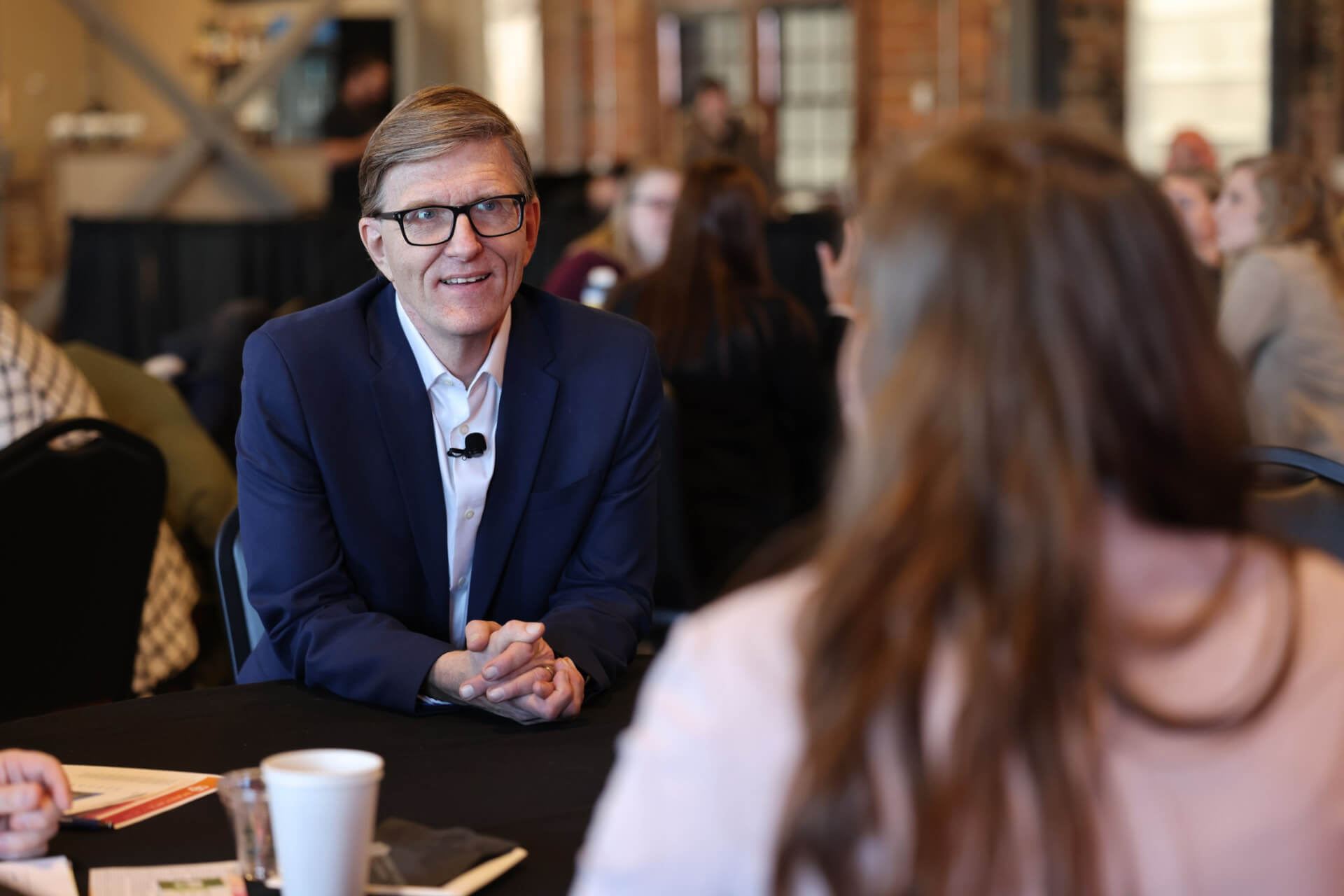
Allen Mavis, a consultant with the Minnesota Skills-Based Hiring Accelerator, facilitates a workshop at the FMWF Chamber’s 2026 Workforce Forum.
Skills-based hiring is reshaping how employers find and grow talent. Learn why this shift matters for workforce success and retention.
The workforce conversation often circles back to a single, frustrating reality: employers cannot find the people they need. During the final session of The Chamber’s 2026 Workforce Forum, the focus shifted from identifying this problem to fixing the systems that perpetuate it.
Jane Vangsness Frisch, vice president of workforce at The Chamber, opened the workshop session by challenging the room to think differently about talent. She noted that the region’s challenge is often a mismatch between how jobs are defined and how skills are actually demonstrated.
"The future of work is less about checking boxes and more about unlocking potential," Vangsness Frisch said.
To help regional employers make that shift, The Chamber and its partners hosted a hands-on skills-based hiring workshop led by Allen Mavis, a consulting facilitator with the Minnesota Skills-Based Hiring Accelerator.
Mavis guided attendees through the strategic shift from relying on credentials to focusing on competencies — a move designed to align job requirements with real business needs and broaden talent pools by recognizing capable candidates who may lack traditional degrees.
Moving beyond scarcity thinking
Mavis challenged attendees to abandon "scarcity thinking" and adopt "capability thinking," which focuses on growing the employees who will build the future.
He noted that traditional hiring often relies on a "Magic 8 Ball" approach, hoping a resume predicts success. Skills-based hiring removes the guesswork by focusing on what a candidate can do and, more importantly, what they can learn.
The difference between skills and competencies
A core takeaway from the workshop was the critical distinction between a “skill” and a “competency”. Mavis explained that while a skill is a specific ability, such as telling time, a competency is the complex application of multiple skills, such as time management.
"We get paid for competency, not an individual skill," Mavis said.
He illustrated this with the example of a cashier. While the role is often viewed as entry-level, it requires a sophisticated mix of technical skills (operating a point-of-sale system) and relational competencies (communication and conflict resolution) performed simultaneously under pressure. When employers fail to break down these competencies in job descriptions, they rely on vague language that confuses applicants and limits the talent pool.
Onboarding as a strategy, not a transaction
Getting a new hire in the door is only half the battle. Mavis described typical onboarding as an "information dump" — a transactional process designed to get an employee working as fast as possible.
He proposed a "transformational" approach using the analogy of teaching a backflip. Just as a gymnastics instructor removes fear by breaking the skill into small, supported steps, effective onboarding should reduce the anxiety of a new role. Instead of throwing a new hire into the deep end, Mavis suggested a roadmap where progress is measured by the employee’s confidence and readiness to take on more responsibility.
The bottom line
Adopting skills-based practices is not just a human resources trend; it is an economic necessity. Data presented during the session showed that structured onboarding can increase retention by 69% for up to three years.
As the region faces demographic shifts and tight labor markets, the businesses that succeed will be those that stop waiting for the perfect candidate to appear and start building the talent they need.
Continue the conversation
This workshop was intentionally incorporated in the Workforce Work in response to priorities raised by employers through the Chamber’s Industry Sector Partnerships and the Community Workforce Partnership convenings facilitated by the NSF Ag Tech Engine. Across these employer-driven conversations, businesses consistently identified the need for practical tools that align hiring, onboarding and talent development with real-world skills and evolving workforce realities.
The Chamber’s workforce team serves as a resource to help employers apply these approaches and connect to related initiatives, including skills-based hiring support, work-based learning opportunities and educator externships through EdVentures. Employers interested in continuing this work or engaging in future ISPs and community workforce conversations are encouraged to contact the Workforce team at the FMWF Chamber.
SHARE
More Stories
Upcoming Events
Subscribe to email newsletters