
02.12.26
2026 Recap of The Chamber’s Minnesota legislative session preview
By Cale Dunwoody, Vice President of Public Policy, FMWF Chamber
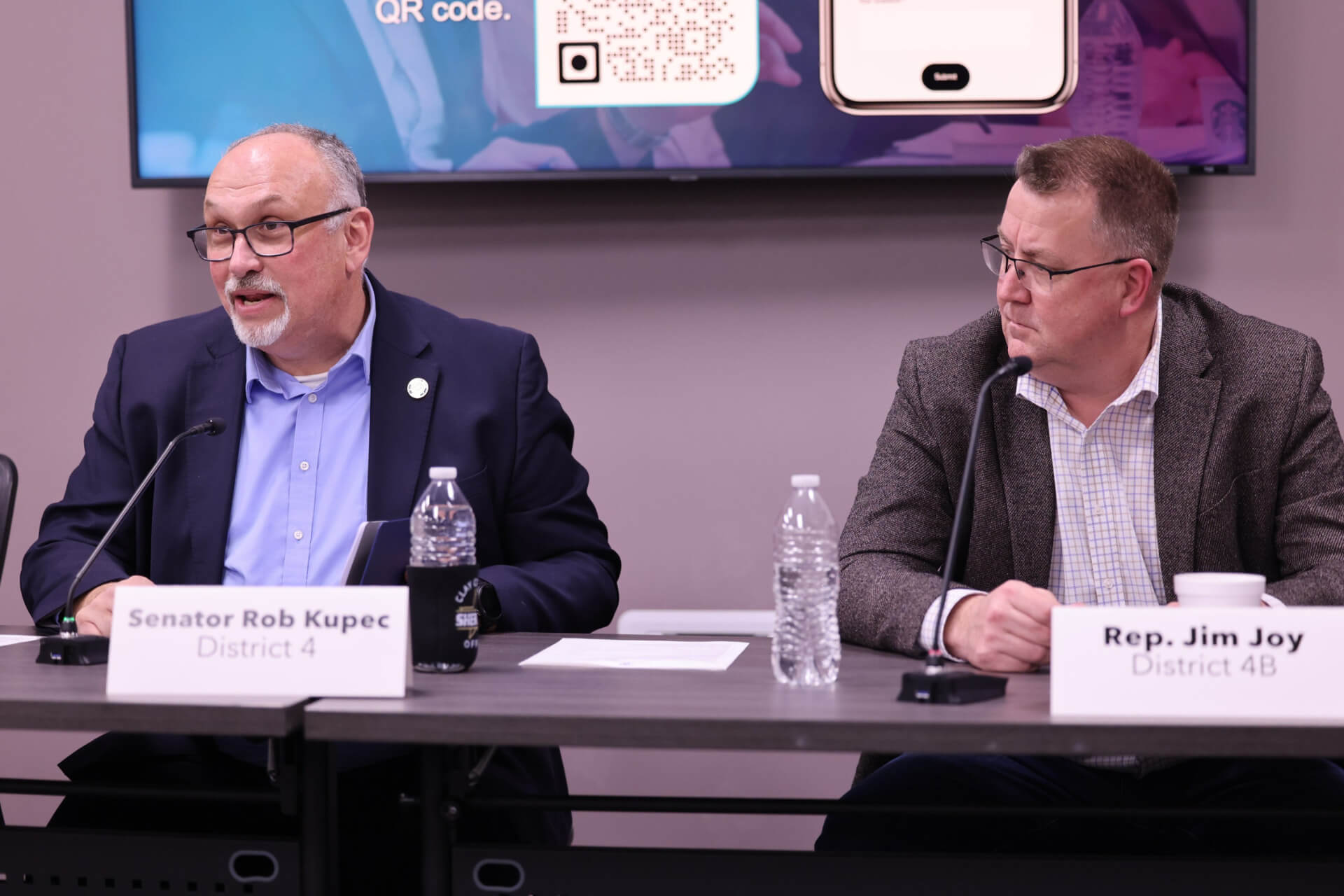
Sen. Rob Kupec and Rep. Jim Joy discuss legislative priorities during the Fargo Moorhead West Fargo Chamber of Commerce’s Minnesota Legislative Session Preview on Wednesday, Feb. 4, 2026, at the Clay County Law Enforcement Center in Moorhead.
Learn key takeaways from the 2026 Minnesota Legislative Session Preview, including taxes, workforce mandates, infrastructure and energy.
With a historically tight split in the state House and a shifting economic landscape, the need for bipartisan cooperation took center stage at the Fargo Moorhead West Fargo Chamber of Commerce’s 2026 Minnesota Legislative Session Preview.
Held on Wednesday, Feb. 4, at the Clay County Law Enforcement Center, the event brought together state lawmakers to outline their priorities for the upcoming session. Moderated by Cale Dunwoody, the Chamber’s vice president of public policy, the panel featured Sen. Mark Johnson, Sen. Rob Kupec, Rep. Jim Joy and Rep. Steve Gander.
The conversation quickly turned to the unique political reality facing St. Paul: a 67-67 partisan split in the House and a 34-33 split in the Senate, favoring the DFL. For Rep. Steve Gander, this deadlock isn't an obstacle but an opportunity. He noted that any legislation passing through the House this session must be bipartisan by definition, a dynamic he described as “not necessarily a bad thing” for ensuring balanced governance.
This sentiment of cooperation was echoed by Rep. Jim Joy, who emphasized the need to "turn the heat down" and lower the temperature of political rhetoric within the caucuses to foster a productive environment. Sen. Mark Johnson agreed, stating that while politicians often retreat to partisan corners, the current climate demands "more room for compromise" to effectively serve Minnesotans.
Budget Concerns and Economic Competitiveness
While the tone was conciliatory, lawmakers acknowledged significant fiscal challenges ahead. The discussion highlighted a shift from previous budget surpluses to concerns regarding potential deficits.
Rep. Joy expressed worry that while state revenue continues to grow, government spending is outpacing it. He noted that taxes have been raised, yet resources remain insufficient to match current spending levels. Gander took a firm stance on the issue, declaring that tax and fee increases should be "off the table." Instead, he advocated for finding savings through work requirements and reducing waste to manage the budget.
The panel also addressed the competitive disadvantage facing Minnesota businesses. Representatives Gander and Joy discussed the urgent need to strengthen "border cities" legislation to prevent high-wage earners and businesses from leaving the state for more favorable tax environments nearby. Sen. Johnson added that the accumulation of state mandates has created a "stressful environment" for business owners.
Workforce and Mandate Implementation
A major topic of concern was the rollout and impact of the Paid Family and Medical Leave program. While Sen. Rob Kupec mentioned that the Department of Employment and Economic Development (DEED) seems to be handling the rollout reasonably well, he acknowledged that legislative tweaks would likely be necessary as utilization rates become clearer.
However, others on the panel highlighted the strain these mandates place on businesses, essential services and local units of government. Rep. Gander emphasized the compliance burden, noting that it is already difficult to run a business without the added time required to ensure adherence to new state mandates.
Bonding, Infrastructure and Energy
Looking toward capital investment, the "bonding bill" remained a priority. Sen. Kupec stressed the importance of capacity, noting that delaying projects only increases costs. He advocated for a bill that balances protecting state assets with funding crucial community projects, specifically highlighting the $64+ million bonding request for flood mitigation as a necessity.
On the energy front, Sen. Johnson suggested it may be time to reconsider the state's moratorium on nuclear energy. With data centers coming online and energy demands skyrocketing, he argued Minnesota must be open to exploring nuclear options to maintain a reliable grid. Additionally, Sen. Kupec pointed to Minnesota’s leadership in sustainable aviation fuel (SAF) as a key economic driver for the future – highlighting the need for expanded tax incentives to secure proposed SAF projects.
Looking Ahead
As the session begins, the FMWF Chamber remains committed to advocating for policies that foster economic growth and regional prosperity. The legislators encouraged the business community to stay engaged. Sen. Johnson advised members to keep a message of “I love this state, but I want to make it better” when visiting the Capitol, while Rep. Joy emphasized the importance of legislators hearing directly from groups on the ground.
The 2026 session promises to be a test of the legislature's ability to navigate a divided government. As Dunwoody concluded the event, it was clear that the voice of the Red River Valley will be essential in shaping the outcomes in St. Paul.
To see The Chamber’s full list of legislative goals and learn more about how we are advocating for business in the region, view our Minnesota and federal legislative priorities.
SHARE
More Stories
Upcoming Events
Subscribe to email newsletters