
02.10.26
From Vision to Action: Tackling Workforce Challenges Head On
By Jane Vangsness Frisch, Vice President of Workforce, FMWF Chamber
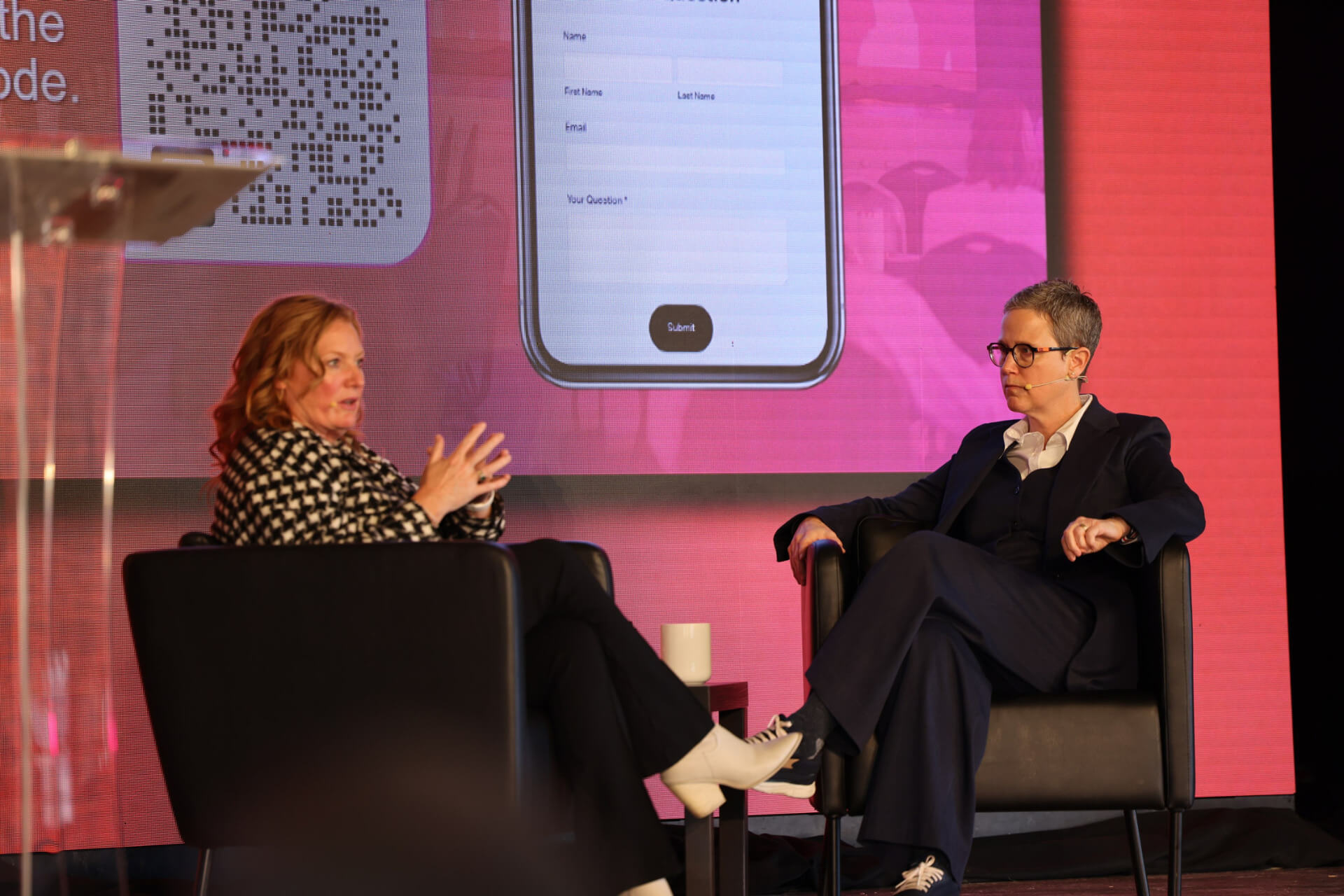
Shannon Full with keynote speaker and futurist Rebecca Ryan at the 2026 Workforce Forum, where leaders explored how to shift workforce planning from reactive strategy to future-ready action.
Learn how leaders can prepare for workforce challenges through future-focused planning and collective action.
Workforce challenges are already on their way. They will show up whether we are ready or not.
At the 2026 Workforce Forum hosted by the FMWF Chamber, business and community leaders from across the Fargo-Moorhead-West Fargo region gathered to move beyond conversation and toward coordinated action. The event’s keynote speaker, nationally recognized futurist Rebecca Ryan, set the tone with a clear message: communities that succeed in the next decade will be the ones that stop planning backward and start preparing forward.
Leaders across industries came together around one shared challenge: how to prepare for a workforce that is changing faster than ever. Rather than offering predictions, Ryan encouraged the room to examine how organizations and communities make decisions today and whether those approaches are enough for what is ahead.
Why strategic planning needs a reset
Many leaders consider themselves responsible for strategy, yet most of their time is spent managing daily demands. Strategic plans often begin with a review of the past and make incremental adjustments based on the assumption that the future will look similar.
"If we have any responsibility as leaders — of families, organizations or communities — we owe it to the people we serve to spend more than 90 seconds a week thinking about the future.” - Ryan said.
That approach can leave organizations unprepared for workforce shifts already underway, including labor shortages, leadership transitions and changing employee expectations. Ryan emphasized that planning for the future requires intentionally looking forward, not backward.
Learning to anticipate change
A key concept shared was the idea of weak signals, early indicators of change that appear before trends fully emerge. These signals might show up in new employee behaviors, evolving technology or shifts in how work is structured.
Leaders who recognize and respond to these early signs are better positioned to adapt with intention rather than react under pressure. For those interested in learning more, futurist Rebecca Ryan expands on weak signals and what to watch for in 2026 in her Futures Friday newsletter.
Planning for multiple possible futures
Another central takeaway was the importance of planning for more than one outcome. Instead of building strategy around a single ideal future, Ryan encouraged leaders to consider a range of possibilities, including challenging, expected and visionary futures.
This approach strengthens resilience and helps organizations remain flexible as conditions evolve.
Workforce trends shaping the next decade
Ryan highlighted several trends affecting communities nationwide, including:
- Fewer workers available than expected post-pandemic
- Increased leadership turnover as baby boomers retire
- Growth in entrepreneurship and self-directed career paths
- The rise of new-collar jobs that blend technical and human skills
Together, these trends point to the need for new approaches to talent development and retention.
Leadership as a collective effort
Ryan made clear that one of the most important takeaways is that people are more committed to futures they help build. Engaging employers, educators and workforce partners in shaping direction builds trust, alignment and long-term stability. Our Industry Sector Partnerships bring these stakeholders together through employer-driven convenings that identify real-time workforce challenges, validate solutions and align education and training investments with industry needs. For those interested in helping shape what comes next, we encourage you to engage in these biannual convenings and be part of the shared work of building a stronger, more responsive workforce system. The workforce shortage in the Fargo-Moorhead-West Fargo region is not solely a recruitment problem; it is a community infrastructure challenge. Following the forward-looking keynote by futurist Rebecca Ryan, the FMWF Chamber’s 2026 Workforce Forum shifted focus to the immediate, data-driven realities facing employers today. The future of work will not be shaped by one organization alone. It will be shaped by leaders willing to look ahead together and take action now. To stay connected to the conversations shaping our region’s workforce, be sure to subscribe to The Chamber’s newsletter, follow us on LinkedIn and watch for upcoming events and programs focused on talent, leadership and long-term growth.
SHARE
More Stories
Upcoming Events
Subscribe to email newsletters